
Things to Do in Lithuania in May
May weather, activities, events & insider tips
Low Season · Budget Friendly
May Weather in Lithuania
Long-run averages for May in Vilnius
65°F (18°C)
High Temp
45°F (7°C)
Low Temp
2.2 inches (56 mm)
Rainfall
67%
Humidity
5
Sunny-Day UV
⚠ Late frost is possible through the first week of May, inland around Vilnius, where overnight temperatures can briefly dip below freezing. This is rare but not unusual. It means early May mornings may feel more like late winter than spring if you are out before 7 AM.
⚠ Tick season begins in earnest in May across Lithuania's forests and grasslands. If you are walking trails at Žemaitija National Park, the Curonian Spit forests, or anywhere with tall grass, wear long trousers tucked into socks and check yourself thoroughly afterward. Lithuania is in the tick-borne encephalitis zone, and travelers planning significant time outdoors should consult a travel health clinic about vaccination well before departure.
Making the most of May in Lithuania? Browse tours and activities in Lithuania on GetYourGuide.
Is May Right for You?
Weigh the advantages and considerations before booking
Advantages
- + Lithuania's daylight stretches past 9 PM by late May, giving you nearly seventeen hours of usable light. That is not a typo. The sun sets so slowly over the Neris River in Vilnius that you can eat dinner outdoors, walk the Bernardinai Garden afterward, and still catch the last copper glow reflected off the cathedral's bell tower. For photographers and anyone who hates being rushed, this extended twilight is the single best reason to come now rather than in the compressed days of September.
- + May lands squarely in the gap between Lithuania's damp, grey spring and its peak summer tourist influx. Vilnius's average high of 18°C (65°F) and low of 7°C (45°F) means comfortable walking weather during the day and the kind of crisp evening that makes a wool layer feel earned rather than annoying. The humidity sits around 67 percent, which is noticeably drier than the 88 percent slog of January. You can spend a full day on your feet in the Old Town without ever needing to duck into air conditioning or thaw out your fingers.
- + The lilac season is real and it changes how the city smells. By the second week of May, the Botanical Garden of Vilnius University and the parks ringing Vingis are heavy with it, a sweet, almost powdery scent that drifts across sidewalks and into open cafe windows. Locals plan walks around it. Combine this with the bird cherry trees flowering white along the Vilnia River and you get a city that feels like it has been holding its breath since October and has finally exhaled.
- + Accommodation and tour availability are substantially better than in July or August, when Vilnius Old Town fills with Scandinavian and German holiday traffic and the Curonian Spit's narrow beaches get crowded. In May you can book most things a week or two out rather than a month, and you will not spend your morning queuing to enter the Gediminas Castle Tower. Restaurants in the Old Town that require reservations three weeks ahead in midsummer tend to have same-day tables now.
Considerations
- − May evenings in Lithuania drop to 7°C (45°F) and sometimes colder, which catches visitors who packed for 'spring in Europe' off guard. If your mental model is Barcelona in May, recalibrate sharply. You will want a proper jacket after sundown, and outdoor dining without a heated terrace gets uncomfortable fast once the light fades. The temperature swing between a sunny 2 PM and a clear 10 PM can be 12°C (22°F), which means layering is not optional, it is the entire strategy.
- − The 56 mm (2.2 inches) of rainfall across May tends to arrive in grey, drizzly stretches rather than quick tropical bursts. A rainy day in Vilnius is not a dramatic storm you wait out, it is a low overcast that hangs around from morning until late afternoon, turning the cobblestones slick and making the medieval streets feel closer and darker. You need a genuine rain jacket, not a decorative one, and waterproof shoes if you plan to walk the forested trails around Trakai or the dunes of the Curonian Spit.
- − Some seasonal operations on the Baltic coast are still ramping up in early May. Ferry schedules to the Curonian Spit from Klaipeda run at reduced frequency until mid-month, and a few of the beach cafes and rental outfits in Nida and Juodkrante do not fully open until the last week of May or even June. If the coast is your primary draw, aim for the second half of the month. The water temperature in the Baltic is still around 10°C (50°F), which is to say cold, not refreshingly cool.
Short on time in May? See day trips around Lithuania on GetYourGuide.
Best Activities in May
Top things to do during your visit
Vilnius Old Town Walking and Cultural Exploration
Vilnius has the largest surviving medieval Old Town in Eastern Europe, and May is arguably the best month to walk it. The air is cool enough that you do not overheat climbing the steep path to the Upper Castle. But warm enough that sitting on the terrace at Pilies Street with a coffee feels like a reward rather than an endurance test. Start early. By 8 AM the light slants low through the narrow lanes around Stiklių Street, the old Jewish quarter, casting long shadows off the baroque facades and catching the stained glass of St. Anne's Church at an angle that disappears by noon. The smell of fresh bread from the bakeries on Savičiaus Street mixes with damp stone, and the only sound is pigeons and your own footsteps on the cobbles. By midday the student crowds from Vilnius University spill into the courtyards, which has its own energy. But the morning belongs to you. The Gediminas Castle Tower, sitting on its hill above the confluence of the Neris and Vilnia rivers, gives you a view that stretches across red rooftops to the modern skyline of Šnipiškės, and in May the surrounding hillside is bright green with new growth. Allow a full day. Most visitors underestimate how much ground the Old Town covers.
Booking Tip: Most of the Old Town is best experienced independently. But guided historical walking tours add genuine depth if you want the Soviet-era and medieval layers explained by someone who grew up here. Book two to three days ahead through licensed local guides. See current guided tour options in the booking section below.
Curonian Spit Nature and Dune Excursions
The Curonian Spit stretches 98 km (61 miles) between the Curonian Lagoon and the Baltic Sea. Visit in May. You beat the summer buses. The Parnidis Dune near Nida climbs 52 m (170 ft) above the lagoon. Scale it late afternoon. Wind drags sand across your ankles. The view opens to bare ridges, almost Saharan, backed by dark pine forest. The smell hits both ways: resin and salt. Thomas Mann's blue cottage sits on a bluff above the lagoon. The novelist summered here in the early 1930s. In May the garden stays quiet enough to hear water below. Birdlife peaks now. Migrants stream through the forests. Grey herons, cormorants, white storks crowd the lagoon shore. The ornithological station at Ventės Ragas has rung birds since 1929. The ferry from Klaipėda takes minutes. You land somewhere that feels remote. Lithuania's third city sits just up the road.
Booking Tip: Canoe and kayak tours reach the quiet stretches no road touches. The lagoon side of the spit rewards paddlers. Book guided excursions a week ahead. Group sizes stay small for the national park. Check current options below.
Trakai Island Castle and Lake District Day Trip
Trakai lies 28 km (17 miles) west of Vilnius. The approach alone earns the trip. The road drops through birch forest. Then the lakes open. Five of them interlock. The red-brick island castle rises from the water like a Northern European fairy tale that happens to be real. May mornings bring glassy surfaces. The castle walls reflect in still symmetry. It looks manipulated in photos. It is simply what the place does. The castle rebuilt in the 1950s from 14th-century ruins houses a museum of the Grand Duchy. The interior smells cool, damp, stone. Centuries of enclosure. The Karaim community has lived here since the 14th century. Turkic settlers brought by Grand Duke Vytautas. They keep a prayer house. They run restaurants serving kibinai. Crescent pastries filled with mutton and onion. The dough flakes. It greases slightly. In the best way. Eat one on the lakeshore. Watch sailboats drift past castle towers. You understand why everyone remembers Trakai.
Kaunas Art Deco and Interwar Architecture Tours
Kaunas served as Lithuania's temporary capital from 1920 to 1940. The city built fast. The confidence still shows in facades along Laisvės Alėja. The pedestrian boulevard runs 1.6 km (1 mile) through center. Interwar modernist and Art Deco buildings cluster here denser than anywhere in the Baltics. UNESCO recognized this heritage in 2023. May works best. Walk for hours without summer heat or winter slush. Spring light angles low. It picks out geometric reliefs and curved balconies. Flat summer sun cannot manage this. The Žaliakalnis funicular dates to 1931. Original wooden cars still creak uphill. The view from top captures the Nemunas and Neris rivers meeting. Every empire that passed through planted a fortress here. The Ninth Fort sits on the city's edge. Soviet and Nazi-era memorial. Essential context for Lithuania's 20th century. The museum shows restraint. This makes it more affecting.
Booking Tip: Architecture walking tours repay the cost here. Local guides explain interwar context. The stories do not appear on plaques. Book a few days ahead. Current guided options appear below.
Nemunas Delta Birdwatching by Canoe
The Nemunas Delta Regional Park marks where Lithuania's longest river spreads into the Curonian Lagoon. One of Northern Europe's most important wetlands. May brings peak migration. White storks nest on chimneys and poles throughout delta villages. Their clattering calls carry across water. Marsh harriers, bitterns, great white egrets work the reed beds. Canoe the quieter channels. Nothing else works. Paddle early morning. Water barely moves. Mist lifts. Only your paddle splashes. Warblers call territorially from the reeds. The experience recalls the Danube Delta. Or the Okavango. Not what you expect from the Baltics. Cape Ventė sits at the delta's southwestern tip. The bird ringing station has operated nearly a century. Ornithologists handle hundreds of migrants daily in May. The air smells of wet grass and peat. Evening light over the lagoon turns soft and golden. Landscape painters chased this across Northern Europe.
Booking Tip: Guided canoe tours with ornithological expertise access restricted delta areas. The most significant nesting colonies sit there. Small groups only. Book at least a week ahead. See current availability below.
Lithuanian Food and Market Culture Immersion
May delivers the first serious local produce of the year to Lithuanian markets, and the shift hits immediately. At Halės Turgus, the iron-roofed market hall in Vilnius that has operated since 1906, the stalls pivot from root vegetables and preserved mushrooms to fresh radishes, wild garlic, and the first bunches of dill, which Lithuanians put on nearly everything and which perfumes the entire hall with a green, anise-adjacent scent. Lithuanian food in May leans heavily on dairy. Šaltibarščiai, the cold beet soup served with hot boiled potatoes on the side, starts appearing on every restaurant menu and home table as soon as the weather warms, and its vivid pink color against a white bowl is one of those visual signatures of the season. The soup is tart from kefir, earthy from beets, and sharp with dill and spring onion, and eating it on a terrace overlooking Vilnius's rooftops on a warm May afternoon is the closest thing to a Lithuanian rite of passage that a visitor can access. Šakotis, the towering spit cake made by dripping batter onto a rotating rod over an open flame, is the country's most distinctive baked good, and watching one being made, the batter forming branch-like spikes as it cooks, is worth seeking out at the weekend craft markets that pop up in Kaunas and Vilnius through May.
Booking Tip: Food-focused walking tours and home-dining experiences with Lithuanian families are the most direct route into the cuisine beyond restaurant menus. These tend to fill quickly in May as the season picks up, so book at least a week ahead. See current dining and food tour options in the booking section below.
Where to Stay in Lithuania in May
Hand-picked hotels across price tiers for May travellers.
★★★★★
Luxury
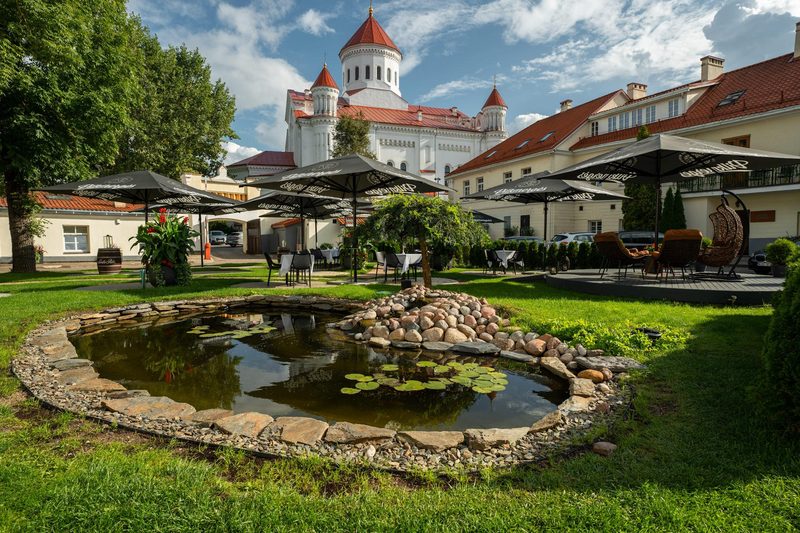
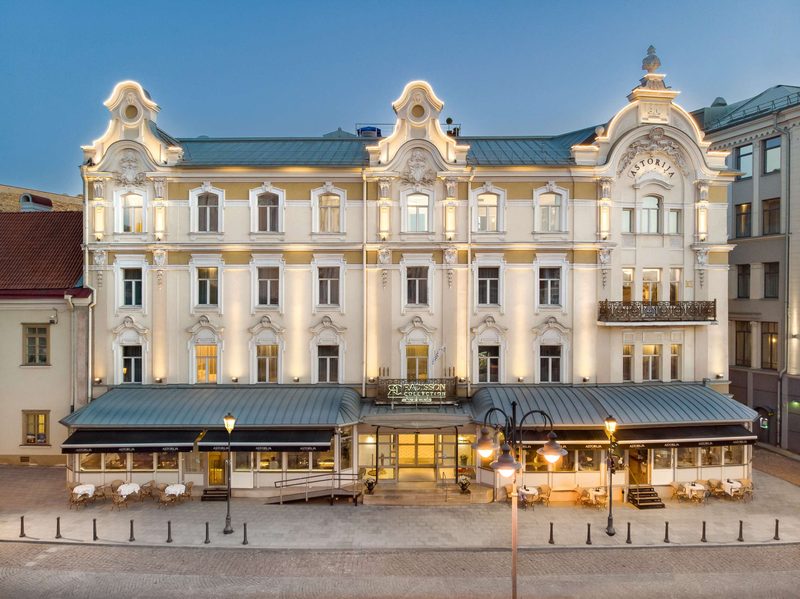
Radisson Collection Astorija Hotel, Vilnius
From $168 / night
Check Prices on Trip.com →
Public Holidays in May
Dates that affect opening hours, transport and crowds
Tarptautinė darbo diena
Known in English as International Working Day. Observed nationwide as a public holiday.
Tarptautinė darbo diena
Known in English as International Working Day. Observed nationwide as a public holiday.
Packing Checklist
Bookmark this page — your progress is saved between visits
Need the full list with shopping links?
Climate-specific gear, brand recommendations, and what to leave at home.
View Lithuania Packing List →Essential Tips
Insider knowledge and common pitfalls to avoid
Insider Knowledge
Lithuanians take their coffee culture seriously. The independent roasters in Vilnius rival anything in Berlin or Copenhagen. The specialty coffee district clusters around Stiklių Street and the edges of the Old Town. Most places pull espresso from locally roasted beans with a precision that would satisfy a Melbourne barista. Order a flat white if you want to test the quality. Sit outside if the weather cooperates. The morning ritual of coffee on a terrace with a view of a baroque church facade is how half of Vilnius starts its day in May. Joining it is the fastest way to stop feeling like a tourist.
The Hill of Crosses near Šiauliai, about 220 km (137 miles) north of Vilnius, is one of the most visually arresting sites in Europe. Almost no one visits it in May. The Soviets bulldozed it three times. Locals rebuilt it each time, planting crosses in defiance until there were over 200,000. The wind through the metal and wood crosses makes a sound like a faint, continuous chime. On a grey May morning with mist low over the surrounding farmland, the effect is eerie. It is worth the drive. Combine it with a stop in Šiauliai rather than making it a day trip from Vilnius. The site itself takes an hour at most. The road time is substantial.
The Užupis district in Vilnius declared itself an independent republic as an art prank on April 1, 1998. The joke has calcified into something real enough that the neighborhood has its own constitution posted on a wall in dozens of languages, its own president, and its own anthem. It is also where a significant concentration of Vilnius's artists and musicians live. In May the riverside studios and small galleries hold open events that are not advertised beyond the neighborhood. Cross the bridge over the Vilnia River. Walk the streets with no agenda. The constitution's Article 1 reads 'Everyone has the right to live by the River Vilnia.' That tells you exactly the spirit of the place.
If you are renting a car and heading to the coast, stop at Žemaitija National Park on the way. Lake Plateliai sits in a glacial basin surrounded by dense forest. In May the trails are empty. The water is mirror-still. The Cold War museum at the former Soviet nuclear missile base hidden in the woods nearby is one of the strangest site-visits in the Baltics. The base operated from 1963 to 1978. The silos are still intact. The tour through the underground bunker, where the temperature hovers around 8°C (46°F) regardless of the season, is a jarring contrast to the pastoral landscape above.
Avoid These Mistakes
Spending all your time in Vilnius and treating the rest of Lithuania as optional is a mistake. Vilnius is the obvious anchor. But Kaunas has a different personality entirely: grittier, more architecturally distinctive, with an interwar confidence that Vilnius's older medieval fabric does not share. The Curonian Spit is unlike anything else in the Baltics. Trakai, at 28 km (17 miles) from the capital, is close enough that skipping it is simply leaving value on the table. The country is small. A car or even the bus network connects everything worth seeing within three to four hours.
Underdressing for the evening is a common error. Every May in Lithuania, visitors who were comfortable in a T-shirt at 3 PM are shivering at an outdoor restaurant at 8 PM. They look around at the locals who all seem to have a jacket. The temperature drops fast after sunset. The wind off the rivers in Vilnius and Kaunas makes 7°C (45°F) feel colder than the number suggests. Layers are non-negotiable. Leaving them at the hotel because the afternoon was warm is the most common regret.
Assuming Lithuania is interchangeable with Latvia and Estonia is a mistake. Trying to rush all three Baltic states into a single week compounds it. They share a geographic label and some history. But the cultures, languages, and landscapes are distinct enough that treating them as a single destination means you experience none of them properly. If you have a week, give it to Lithuania. You will not run out of things to do. You will leave understanding the country rather than having merely passed through it.
Ready to plan your trip to Lithuania?
Now that you've got the research covered, here's where to go next.
Book Experiences in Lithuania
Top-rated things to do in Lithuania this May

Explore More Activities in Lithuania
Didn't see anything interesting yet?
Browse Viator's full catalog of tours, day trips, food experiences, and private guides in Lithuania.
See All Lithuania Tours on Viator