
Things to Do in Lithuania in August
August weather, activities, events & insider tips
High Season · Book Early
August Weather in Lithuania
Long-run averages for August in Vilnius
73°F (23°C)
High Temp
54°F (12°C)
Low Temp
3.0 inches (76 mm)
Rainfall
75%
Humidity
5
Sunny-Day UV
⚠ Afternoon thunderstorms can develop rapidly in August, inland around the lake districts. Lightning is a real concern on exposed terrain like the Parnidis Dune on the Curonian Spit or open meadows in Aukštaitija National Park. If you hear thunder while on an exposed trail or dune, descend immediately. Seek shelter in forest cover or a building.
Making the most of August in Lithuania? Browse tours and activities in Lithuania on GetYourGuide.
Is August Right for You?
Weigh the advantages and considerations before booking
Advantages
- + Lithuania's warmest month delivers roughly sixteen hours of usable daylight, with the sun not fully setting in Vilnius until well past nine in the evening. That extended golden hour turns the baroque facades of Pilies Street a shade of amber you simply do not get in any other season. Outdoor dining along the Vilnelė River keeps going until the light finally fades around ten. Worth the wait.
- + August is cold beet soup season. Šaltibarščiai appears on practically every table in Lithuania. This shocking-pink chilled soup, sharp with kefir and earthy with grated beet, is the country's unofficial summer dish. It arrives with a side of hot boiled potatoes. The temperature contrast between the ice-cold bowl and the steaming potatoes lodges in memory. Foraging season peaks now. Wild blueberries, chanterelles, and boletus mushrooms fill the forest floors of Dzūkija and Aukštaitija. Roadside sellers along the highways stack baskets of them on folding tables.
- + The Baltic coast reaches its most swimmable temperatures in August. Palanga's white-sand beach stretches for nearly 18 km (11 miles). The water off the Curonian Spit becomes tolerable, hovering around 19 to 22 degrees Celsius (66 to 72 degrees Fahrenheit). For a country this far north, that is as warm as it gets. Locals treat it with appropriate urgency.
- + Žolinė, the Feast of the Assumption on August 15, is both a national holiday and one of Lithuania's oldest surviving traditions. Women gather bundles of herbs, grains, and wildflowers into elaborate bouquets that get blessed at church. The scent of dried chamomile, St. John's wort, and rye stalks fills the naves of village churches across the countryside. It is the closest Lithuania comes to a harvest festival before autumn arrives.
Considerations
- − This is peak season. The Curonian Spit feels it. The narrow sand road between Nida and Juodkrantė backs up with cars. The Thomas Mann House draws queues by mid-morning. Accommodation on the Spit typically needs booking six to eight weeks ahead. Palanga's Basanavičiaus Street, the main pedestrian promenade, becomes shoulder-to-shoulder after dark. Weekends are worse. Vilnius empties toward the coast.
- − Afternoon thunderstorms roll in without much warning, in the eastern lake districts around Aukštaitija. Vilnius averages about 76 mm (3.0 inches) of rain across August. A fair portion of that falls in sudden, heavy downpours that can cut a cycling excursion or lakeside afternoon short. They tend to pass within thirty to forty-five minutes. If you are caught on the Parnidis Dune or a forest trail without a jacket, those minutes feel considerably longer. Pack accordingly.
- − Accommodation prices across Lithuania climb noticeably in August, along the coast and in Vilnius Old Town. Lithuanian families take their own holidays this month. You are competing with domestic travelers as well as international visitors. Booking last-minute in Nida or Palanga is likely to leave you in a guesthouse several kilometres inland from the beach. Walking distance becomes a luxury.
Short on time in August? See day trips around Lithuania on GetYourGuide.
Best Activities in August
Top things to do during your visit
Curonian Spit Canoeing and Lagoon Exploration
The Curonian Spit in August offers something the rest of Lithuania cannot match: a landscape so geologically strange it feels imported from another continent. The Parnidis Dune near Nida rises 52 metres (170 feet) above the lagoon. From its crest you can see the Russian border to the south and the flat shimmer of the Curonian Lagoon to the east. Paddling a canoe along the lagoon side of the Spit, the water is tea-coloured and calm, sheltered from the Baltic winds by the forested spine of the peninsula. August's warmth makes this comfortable rather than heroic, with air temperatures sitting around 23 degrees Celsius (73 degrees Fahrenheit) and the lagoon water warm enough that capsizing is refreshing rather than dangerous. Grey herons stand motionless in the reed beds. If you are out early enough, the mist lifts off the water in layers that make the whole scene feel staged. Licensed operators run half-day and full-day routes from Nida and from Klaipėda's ferry terminal. Book at least two weeks ahead in August, as group sizes stay small and slots fill quickly. See current options in the booking section below.
Booking Tip: Book two to three weeks ahead for August departures. Look for operators who launch from the lagoon side rather than the open Baltic, as conditions are calmer and wildlife sightings are more frequent. Half-day tours suit most visitors. Full-day routes suit experienced paddlers comfortable with 15 to 20 km (9 to 12 miles) on the water.
Vilnius Old Town Food and Culture Walking Routes
Vilnius in August is the most walkable version of itself. The Old Town, one of the largest medieval centres in Eastern Europe at roughly 3.6 square kilometres (1.4 square miles), spills its life outdoors. Cafe tables colonise the cobblestones of Stiklių Street. The smell of freshly baked šakotis, that towering spit cake with its spiky branches of golden batter, drifts from bakery windows left open to catch the breeze. The courtyard bars of the Užupis district fill up by late afternoon. August evenings in Vilnius cool to around 12 degrees Celsius (54 degrees Fahrenheit). The transition from warm-day sightseeing to cool-evening dining happens naturally and pleasantly. A guided food walk covers territory you would likely miss on your own: the Halės Market, where vendors sell smoked pork ears and rounds of Džiugas cheese aged for three years. The Karaite kibinai stalls that foreshadow a day trip to Trakai. And the basement bars along Vokiečių Street where Lithuanian craft beer has been quietly becoming excellent. The KGB Museum, formally the Museum of Occupation and Freedom Fights, sits just off Gediminas Avenue and deserves a guided visit to make sense of the cells in the basement where the acoustics alone communicate what happened there. See current tour options in the booking widget below.
Booking Tip: Morning tours beat the heat and the crowds. Book a week ahead for August, and look for small-group formats with no more than eight to ten people. Wear shoes with decent grip. The cobblestones in Vilnius Old Town are uneven and slippery after rain.
Trakai Island Castle and Lake District Day Trips
Trakai sits 28 km (17 miles) west of Vilnius, and in August the cluster of lakes surrounding the red-brick island castle turns the whole scene into something that looks computer-generated but is not. Lake Galvė, the largest of the surrounding lakes, is warm enough for swimming by August, and the view of the castle from the water, its Gothic towers reflected in water so still it doubles the image, is probably Lithuania's single most photographed scene for good reason. The town itself is historically Karaite, a Turkic community brought here by Grand Duke Vytautas in the fourteenth century, and the wooden houses along Karaimų Street, painted in green, yellow, and blue, still house families who make kibinai: crescent-shaped pastries filled with mutton and onion, the dough thin enough to shatter when you bite through it, the filling rich with fat and black pepper. August is good for combining the castle visit with a kayak or pedal-boat circuit of the lake. The walk across the wooden footbridges to the castle island takes five minutes. The smell of the lake, warm algae and pine resin from the surrounding forest, is the smell of Lithuanian summer. Arrive before ten in the morning to beat the tour bus arrivals. See current day-trip options in the booking section below.
Booking Tip: Day trips from Vilnius run frequently in August. But the best ones depart early and include time on the lake, not just the castle interior. Book five to seven days ahead. If you prefer to go independently, the train from Vilnius takes thirty-five minutes and drops you a pleasant 2 km (1.2 mile) walk from the castle through the town.
Nemunas Delta Birdwatching by Canoe
The Nemunas Delta, where Lithuania's longest river fans into the Curonian Lagoon near the coast, is one of Northern Europe's most important wetland habitats, and August catches the early autumn migration beginning to stack birds onto the marshes. Cape Ventė, the delta's main observation point, has recorded over 260 species, and in August you might see white storks gathering in pre-migration flocks of fifty or more in the meadows, along with marsh harriers, bitterns, and colonies of cormorants that have stripped whole stands of trees to skeletal white. Paddling a canoe through the delta channels in August, the water is warm, the reed beds tower overhead, and the silence between birdcalls is the kind of quiet that city visitors find almost disorienting. The air smells of wet peat and warm grass. This is not gentle countryside. The delta is flat, exposed, and the wind off the lagoon can pick up sharply even on warm days. But for birdwatchers and anyone who responds to landscapes that feel remote, the Nemunas Delta in August is difficult to match anywhere in the Baltics. Check the booking section below for guided canoe tours with naturalist guides.
Booking Tip: Guided canoe tours with knowledgeable naturalists tend to book up in August because group sizes are kept small, typically four to six paddlers. Book two to three weeks ahead. Bring binoculars and a wide-brimmed hat. The delta offers almost no shade and you will be on the water for several hours.
Kaunas Interwar Architecture and Street Art Walks
Kaunas, Lithuania's second city and its interwar capital from 1920 to 1940, has a density of Art Deco and modernist architecture that caught UNESCO's attention and earned it a designation in 2023. August is the month to see it because the long light rakes across the geometric facades of Laisvės Alėja, Europe's longest pedestrian boulevard at 1.6 km (1 mile), in a way that picks out every decorative detail. The city has leaned hard into street art in recent years, and the Kiemo Galerija courtyard galleries in the Old Town turn anonymous courtyards into open-air exhibitions that change seasonally. The Ninth Fort, on the city's outskirts, is Lithuania's most important Holocaust memorial site, and visiting it is heavy but essential to understanding the country. In lighter contrast, Kaunas's restaurant scene along Vilniaus Street has grown sharply, and August evenings see tables spilling into courtyards where the sound of Lithuanian conversation mixes with jazz from basement bars. The Nemunas and Neris rivers meet here, and walking along the confluence path at dusk, the water catches the last light while the air cools from the day's warmth into something that feels like early autumn even though the calendar says otherwise.
Booking Tip: Kaunas works as a day trip from Vilnius by train, about seventy-five minutes each way. But deserves an overnight to catch the evening atmosphere along Laisvės Alėja. If booking a guided architecture walk, look for guides who cover the interwar modernist district specifically, not just the Old Town. Book a few days ahead in August.
Aukštaitija National Park Lake Camping and Forest Trails
Aukštaitija National Park sits about 100 km (62 miles) northeast of Vilnius. Over a hundred lakes thread through it, linked by rivers and portage trails that Lithuanian families have paddled for generations. August is when the park shines. The water hits its warmest. Birch and pine forests turn deep green and thick with resin scent. Wild blueberries crowd the forest paths. You can graze as you walk. Palūšė village, on Lake Lūšiai, works as the park's informal hub. Its wooden church was built without a single nail. It sits so close to the water that calm mornings bring perfect reflections. Lakeshore camping in August delivers mist at dawn and woodpecker calls. It also brings mosquitoes at dusk. They are relentless. Repellent is essential. The trail network is well-marked but quiet. Walk an hour through old-growth forest and you might see no one. For travelers who find the coast packed in August, Aukštaitija is the answer.
Booking Tip: Canoe and kayak hire operates in Palūšė and Ginučiai. Most August weekdays need no advance booking. Weekends fill fast. Lithuanian families arrive in force. Guided multi-day canoe routes through the connected lakes require booking ten days to two weeks ahead. Campsites run first-come, first-served. Arrive before midday Friday. This secures the best lakeside spots.
Where to Stay in Lithuania in August
Hand-picked hotels across price tiers for August travellers.
★★★★★
Luxury
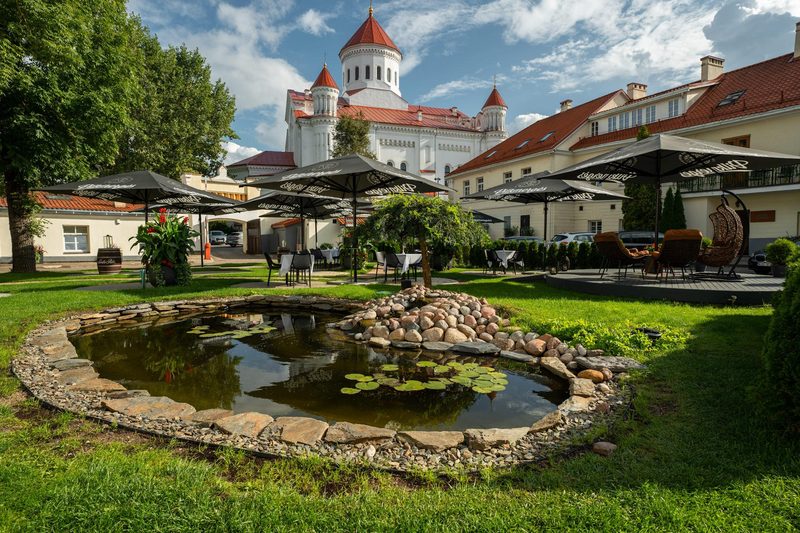
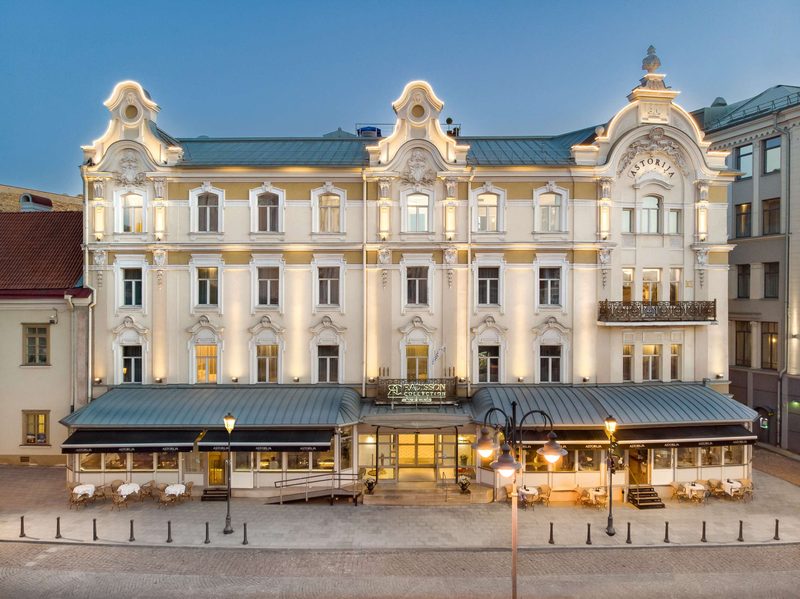
Radisson Collection Astorija Hotel, Vilnius
From $168 / night
Check Prices on Trip.com →
Public Holidays in August
Dates that affect opening hours, transport and crowds
Žolinė
Known in English as Assumption Day. Observed nationwide as a public holiday.
Žolinė
Known in English as Assumption Day. Observed nationwide as a public holiday.
Packing Checklist
Bookmark this page — your progress is saved between visits
Need the full list with shopping links?
Climate-specific gear, brand recommendations, and what to leave at home.
View Lithuania Packing List →Essential Tips
Insider knowledge and common pitfalls to avoid
Insider Knowledge
Šaltibarščiai is the cold beet soup that defines Lithuanian summer. It arrives shocking pink, ice cold, tangy with kefir, studded with diced cucumber and hard-boiled egg. A plate of steaming boiled potatoes comes alongside. Crumble them in as you eat. Every Lithuanian has an opinion about the correct ratio of beet to kefir. Order it everywhere. Compare. Form your own. It is likely the most refreshing lunch you will eat in August.
The Hill of Crosses near Šiauliai, about 220 km (137 miles) north of Vilnius, defies photography. Over 200,000 crosses of every size cover a small hill. The wood and metal creak and clink in the wind. The sound is eerie even in bright August sunshine. The Soviets bulldozed it three times. Lithuanians rebuilt it each time. Arrive at dawn if you can manage it. The light is low then. The site is empty. By midday, tour buses from Riga and Vilnius have arrived. The contemplative atmosphere dissolves.
Lithuanian craft beer has improved dramatically and quietly. Vilnius and Kaunas both have brewery taprooms where the quality rivals anything in Belgium or the Czech Republic. The local style leans toward unfiltered farmhouse ales and smoked porters. Kepta duona is the universal beer snack. It is fried rye bread rubbed with raw garlic and served with a sour cream dip. The smell of garlic and hot oil from the kitchen is how you know you have found the right kind of bar.
If you are driving the coast road between Klaipėda and Palanga in August, stop at the roadside berry and mushroom sellers. Skip the supermarkets. The wild blueberries are smaller and more intensely flavoured than cultivated ones. The chanterelles, golden and smelling of apricot, are forest-fresh. Pointing and smiling works fine if your Lithuanian is nonexistent. The sellers are accustomed to it.
Avoid These Mistakes
Underestimating distances and assuming Lithuania is small enough to see in two days is a common error. Vilnius to the Curonian Spit is about 310 km (193 miles). With summer traffic and the mandatory ferry crossing at Klaipėda, the drive takes four hours or more. Trying to cram Vilnius, Trakai, Kaunas, the Hill of Crosses, and the coast into a long weekend leaves you seeing everything from a car window. You will see nothing from the ground.
Skipping Kaunas entirely in favour of a second day in Vilnius is a mistake. Kaunas has a different energy. Less polished. More raw. Its interwar architecture district and the sobering Ninth Fort are experiences Vilnius cannot replicate. The train connection is fast and frequent. Even a single day in Kaunas changes your understanding of Lithuania considerably.
Assuming the Baltic Sea will be warm enough for casual swimming without checking conditions first leads to disappointment. August is the warmest the water gets. Even at 19 to 22 degrees Celsius (66 to 72 degrees Fahrenheit) it is noticeably colder than the Mediterranean or Southeast Asian beaches most travelers are calibrated to. The initial shock passes after a minute. If you wade in expecting tropical warmth, you will wade right back out.
Ready to plan your trip to Lithuania?
Now that you've got the research covered, here's where to go next.
Book Experiences in Lithuania
Top-rated things to do in Lithuania this August

Explore More Activities in Lithuania
Didn't see anything interesting yet?
Browse Viator's full catalog of tours, day trips, food experiences, and private guides in Lithuania.
See All Lithuania Tours on Viator